
Accountability, Responsibility and the Earth in Trust
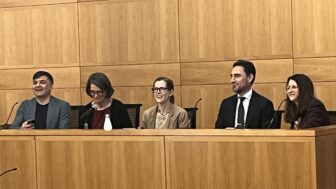
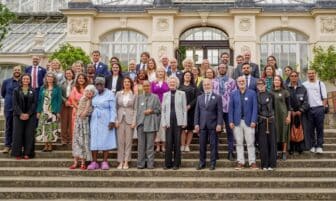
“Earth is not an inert set of resources,” said CEE Executive Director Karenna Gore. “Our lives depend on the health of the biosphere.” Gore made this observation at “The Earth

“Earth is not an inert set of resources,” said CEE Executive Director Karenna Gore. “Our lives depend on the health of the biosphere.” Gore made this observation at “The Earth

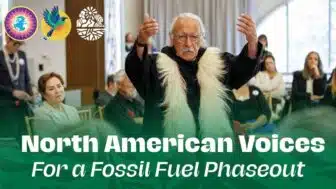
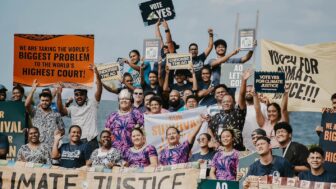
As governments and civil society prepare for the First International Conference on the Transition Away from Fossil Fuels in Santa Marta Colombia, the call for a fast, fair and financed

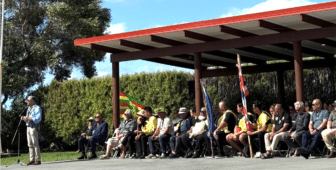
The Pacific Island State of New Zealand is known in the Indigenous Māori language as Aotearoa. This term is commonly translated as “the land of the long white cloud.” While

CEE Executive Director Karenna Gore—along with CEE’s Samira Siddique, Clara Chavez-Ives and Rosie Semlyen—are heading to the UN Climate Conference, COP30, in Belém, Brazil. The Center’s delegation will amplify voices and ideas

“Our survival depends on a spiritual transformation, as much as a technical revolution.” SUNY Distinguished Teaching Professor and Potawatomi writer and scientist Robin Wall Kimmerer gave this advice during the

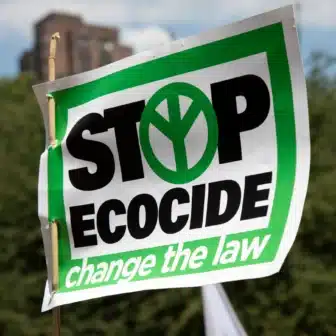
As the global environmental crisis intensifies, new environmental law paradigms are gaining momentum, offering stronger tools to protect the natural world as well as ensure justice and accountability. Among these

On July 23, 2025, the International Court of Justice (ICJ) delivered a groundbreaking advisory opinion on climate change. For the first time, the United Nations’ top court unanimously affirmed that

Updated July 25, 2025 The Center for Earth Ethics is honored to announce that Executive Director Karenna Gore will serve as the regional co-leader for the North America Dialogue of

This summer, the future of the deep ocean took center stage. In June, global leaders, scientists and civil society convened at the UN Ocean Conference in Nice, France, and at

“The environment knows no borders. Environmental costs are very much interconnected with the humanitarian situation. It’s a cycle that becomes quite difficult to break,” reflected Elaine Donderer during a webinar