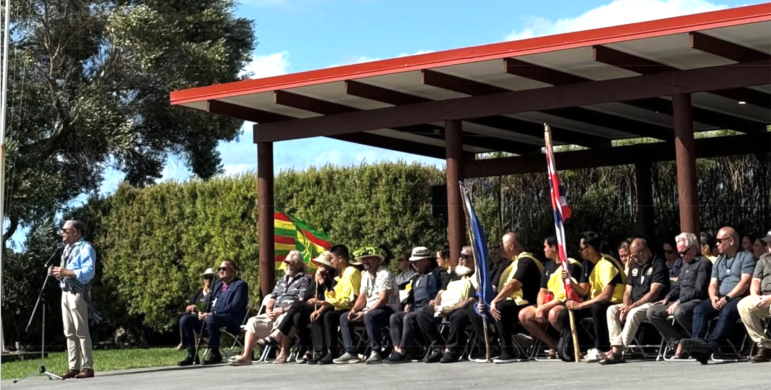
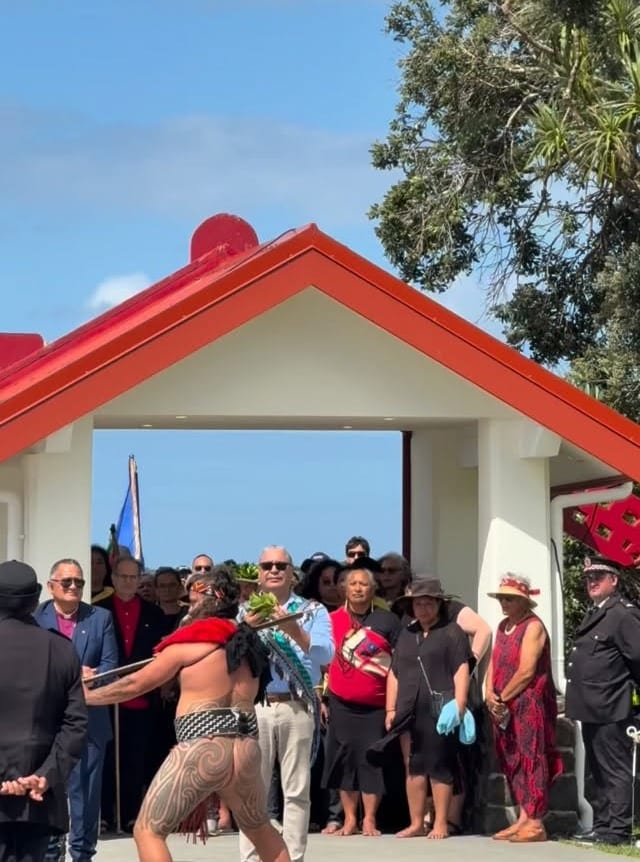
As a Caribbean Indigenous person, a Guainía Taíno, representing the International Indian Treaty Council, I had the honor to participate, in solidarity, at several high-level events during this year’s commemoration at Waitangi. Listening to Māori leaders express their frustrations over current government initiatives, I could not help but to juxtapose their situation with the experiences of other Indigenous Peoples who are also seeing their rights increasingly violated by rightwing, populists, conservative governments around the world.
Since the first major Treaty of Waitangi settlements in the early 1990s, Māori iwi have built a stronger economy for their communities, with assets growing significantly over the past 20 years. Māori also control a significant portion of the forestry sector and have seen a strong revival of te reo Māori (language) and culture. This includes the establishment of Māori Television, kōhanga reo (language nests), kura kaupapa (immersion schools), and widespread recognition of the language as an official language of New Zealand.
 Māori have become increasingly vocal in asserting their rights through protest and legal action (e.g., the Foreshore and Seabed protests, Ihumātao) organized to protect their rights and the principles of the Treaty of Waitangi. In recent years, Māori have pioneered the Rights of Nature movement by securing legal personhood for natural entities like the Whanganui River and Te Urewera Forest, based on Indigenous worldviews where humans are guardians (kaitiaki) of the environment. These laws recognize ecosystems as living entities with legal rights and are rooted in the Treaty of Waitangi, enabling the integration of Indigenous rights with environmental protection.
Unfortunately, despite these successes, challenges remain, with studies noting that Māori continue to face disparities in health, income and educational outcomes compared to non-Māori. Māori assert that recent changes in policy will exacerbate disparities. The 2026 commemoration highlighted a continued struggle to define the role of the Treaty of Waitangi in today’s Aotearoa/New Zealand. In this sense, the day acts as a relevant focal point for the evaluation and critique of government policy and its impact on the rights of Indigenous Peoples.
