Prayer and Positive Action
108-Mile Women’s Water Walk Honors Water and Highlights Dangers of Proposed Constitution Pipeline
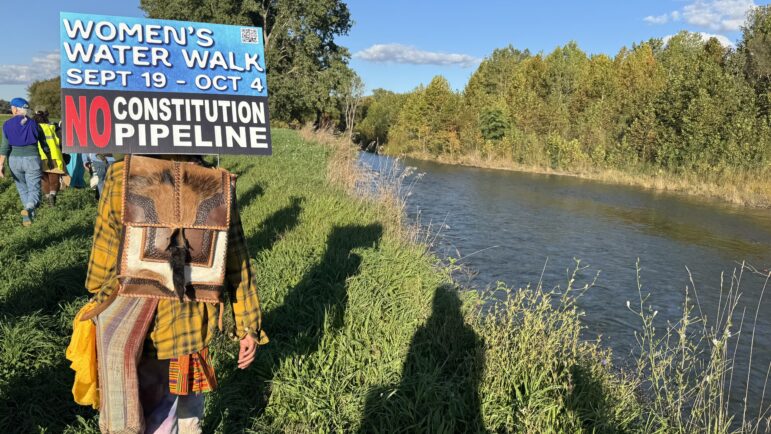
On September 19, a group of concerned citizens from New York state and beyond gathered at Arctic Lake in Oquaga Creek State Park in upstate New York to begin a two-week walk in protection of water. A core group of walkers, joined by scores of supporters who walked for one or more days at a time, walked, sang and prayed for 108 miles along the route of the proposed Constitution Pipeline, arriving on October 4 in the town of Schoharie, New York.
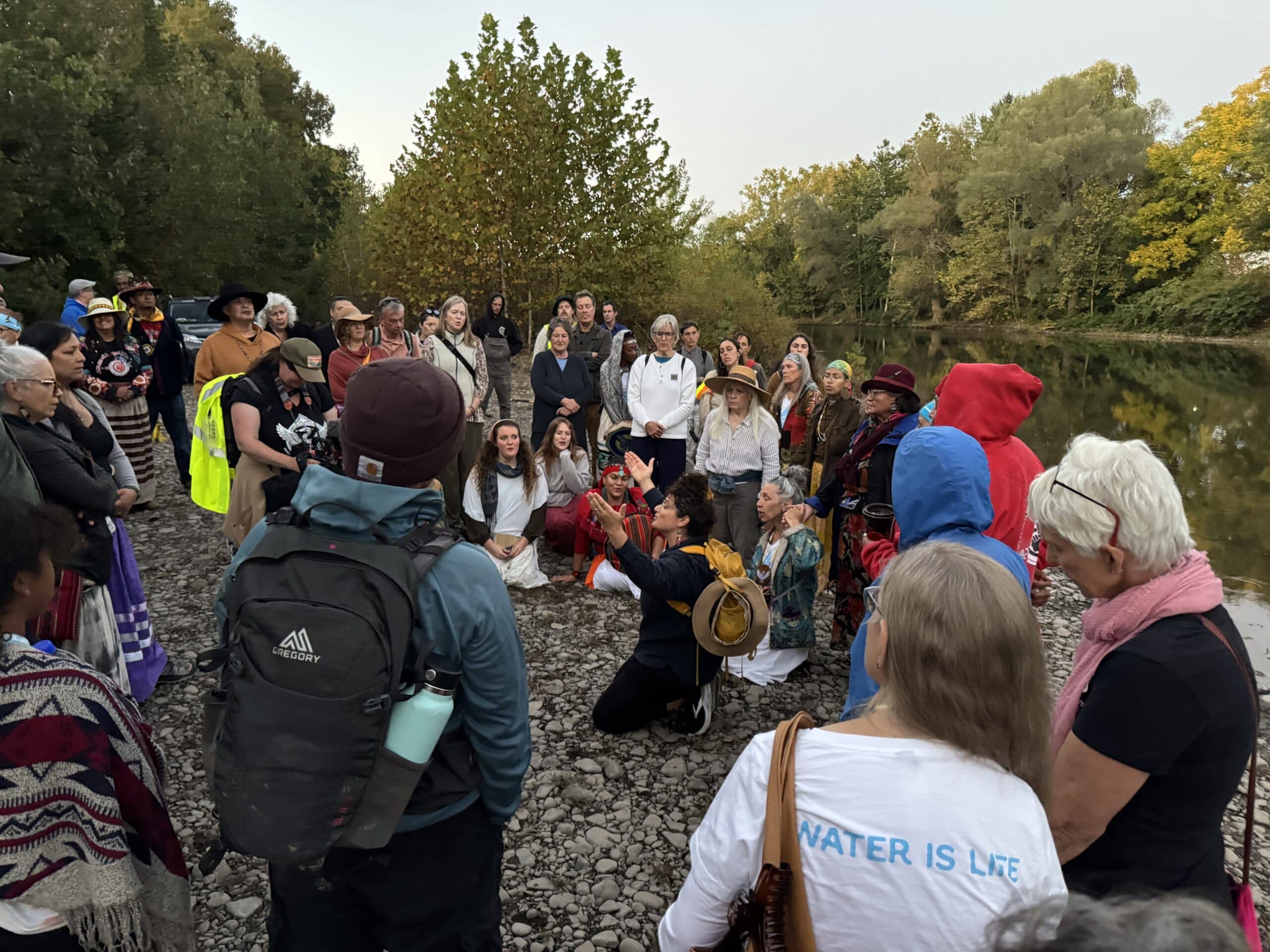
“Rooted in prayer and positive action,” the water walk followed a lineage of spiritual and social pilgrimage, raising awareness through the meditative act of walking, meeting people and holding community information sessions along the way.
Largely organized by the Waterfall Unity Alliance, a women-led organization in the Schoharie Valley, and with guidance from a group of Indigenous elders, the walk also followed a tradition of water walks including those led by Anishinaabe water protector Josephine Mandamin. Mandamin began her water walks in 2003 with a 36-day long journey around Lake Superior, and she continued with walks each year for the rest of her life, circling all the Great Lakes and visiting many other waterways. For each of these walks she carried a copper pail of water to lead the way.
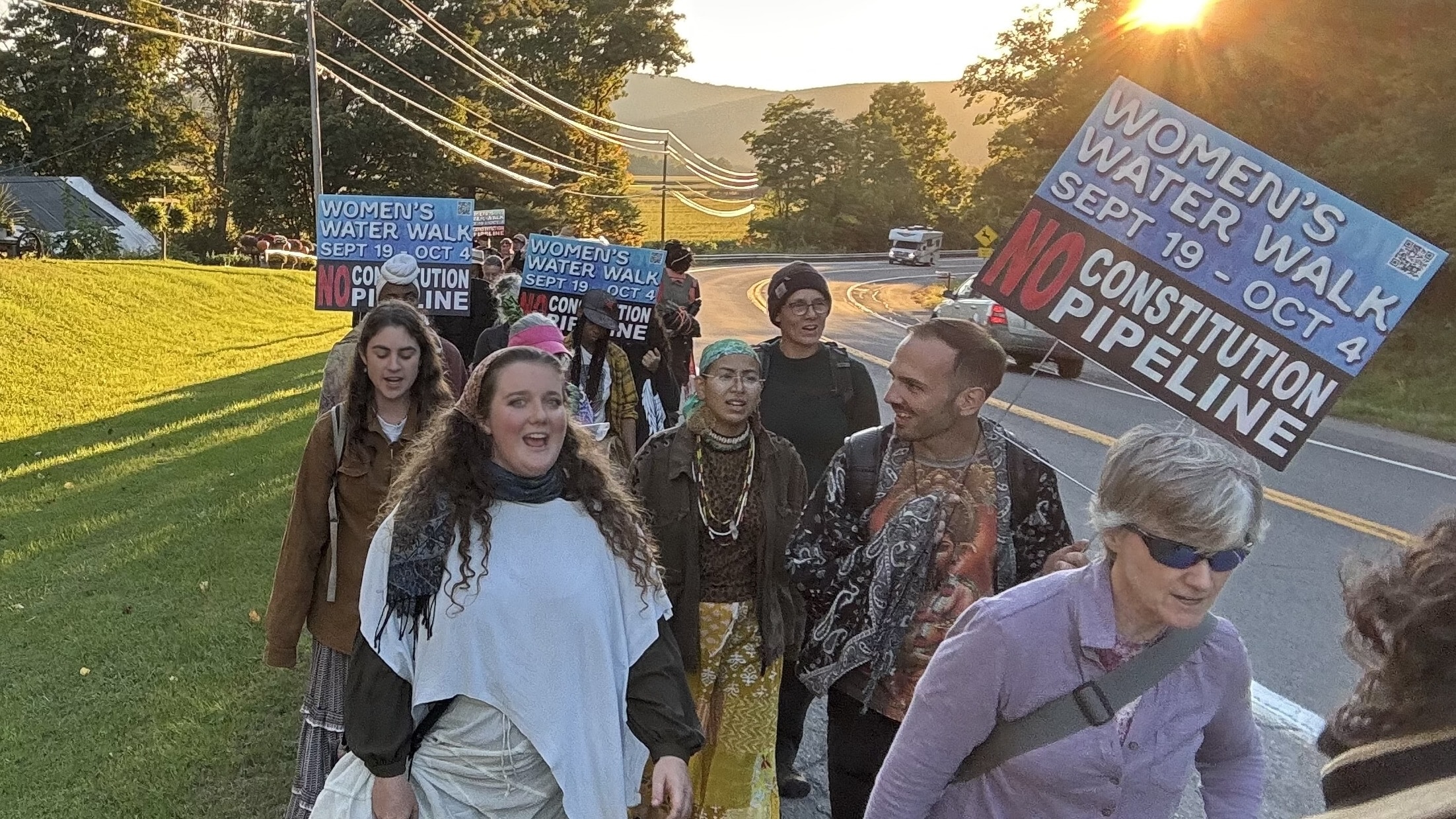
“Rooted in prayer and positive action,” the water walk followed a lineage of spiritual and social pilgrimage, raising awareness through the meditative act of walking, meeting people and holding community information sessions along the way.
Tory Field
The tradition of water leading the way was followed at the Women’s Water Walk. During each morning’s introductory gathering, Bethany Yarrow, a lead organizer from the Waterfall Unity Alliance, explained the larger protocols and plan for the day. “Our prayer is in the water,” she said “and my teachers have taught me to never get in front of your prayer, because that is when things get confusing. Our prayer is in the water, so please follow behind the water.” This protocol —both literal and metaphoric—helped walkers stay organized and also reminded everyone: “Keep your focus and your intention on protection of the water.” Water was collected and given as an offering at streams along the way.
The walk included stops at small farms and businesses. Several community members who joined would be directly impacted by this pipeline. “Each of us who have the great privilege of being land stewards need to take that responsibility very seriously and use our voices right now and say no to this kind of development,” said Tanja Konwinski, an affected community member in Schoharie County, at a press conference leading up to the walk. “We cannot sacrifice one stream or one tree in continued tribute to fossil fuels.”
This is not the first time that New York’s citizens have opposed the proposed Constitution Pipeline. The pipeline was first introduced in 2012, but in 2016 New York State denied the construction permit citing the Clean Water Act and potential ecological impacts. In January 2026, under the Trump Administration, the EPA proposed policy changes that would undercut the Clean Water Act and state’s abilities to protect their waters, “eliminating regulatory overreach that has imposed unnecessary burden on critical infrastructure projects.” Riding on the Trump administration’s corporate-friendly policies, the Williams Company is once again pushing for the pipeline.
Shortly after the walk ended, on October 19th, the U.S. Department of Energy announced that it would give $42 million in federal funding to advance construction of the pipeline. A spokesperson for NY Governor Kathy Hochul said the announcement was “nothing more than a political ploy to divert attention from Trump’s tariffs and his reckless war in Iran that have not only failed to bring down prices as the President promised, but have dramatically driven up home energy costs and gas prices at the pump.”
We cannot sacrifice one stream or one tree in continued tribute to fossil fuels.
Tanja Konwinski
The Constitution Pipeline is a multifaceted threat to water. Pipeline construction is highly disruptive—damaging land and waters along the route. The Constitution Pipeline would cross 289 bodies of water and impact more than 95 acres of wetlands, clearing 1,872 acres of land and approximately 700,000 trees.
As infrastructure for carrying fracked gas, the pipeline would support continued fossil fuel reliance and contribute to global warming, threatening all life on the planet, including clean, healthy water. Global warming is making water temperatures rise, causing dramatic ecological imbalances in lakes, rivers and oceans. Increased tragic extremes of flooding, drought, glacier melt, sea level rise and changes in ocean currents show us climate change impacts on water. A fracked gas pipeline moves us in exactly the opposite direction from the necessary shift towards renewable energy sources.
Methane is a significant greenhouse gas, and leaks along pipelines are also common. This means that pipelines and related infrastructure contribute significantly to global warming even before the gas is burned.
Pipelines carry other human and ecological health risks. Compressor stations along the pipeline, which keep the gas moving, are known to release an array of air pollutants that have significant health effects, including asthma, cardiovascular disease and increased cancer risk. Explosions along pipelines and at compressor stations are also a risk. And the pipeline will likely fuel new data centers, which have their own tremendous ecological repercussions, including the use of massive amounts of water for cooling.
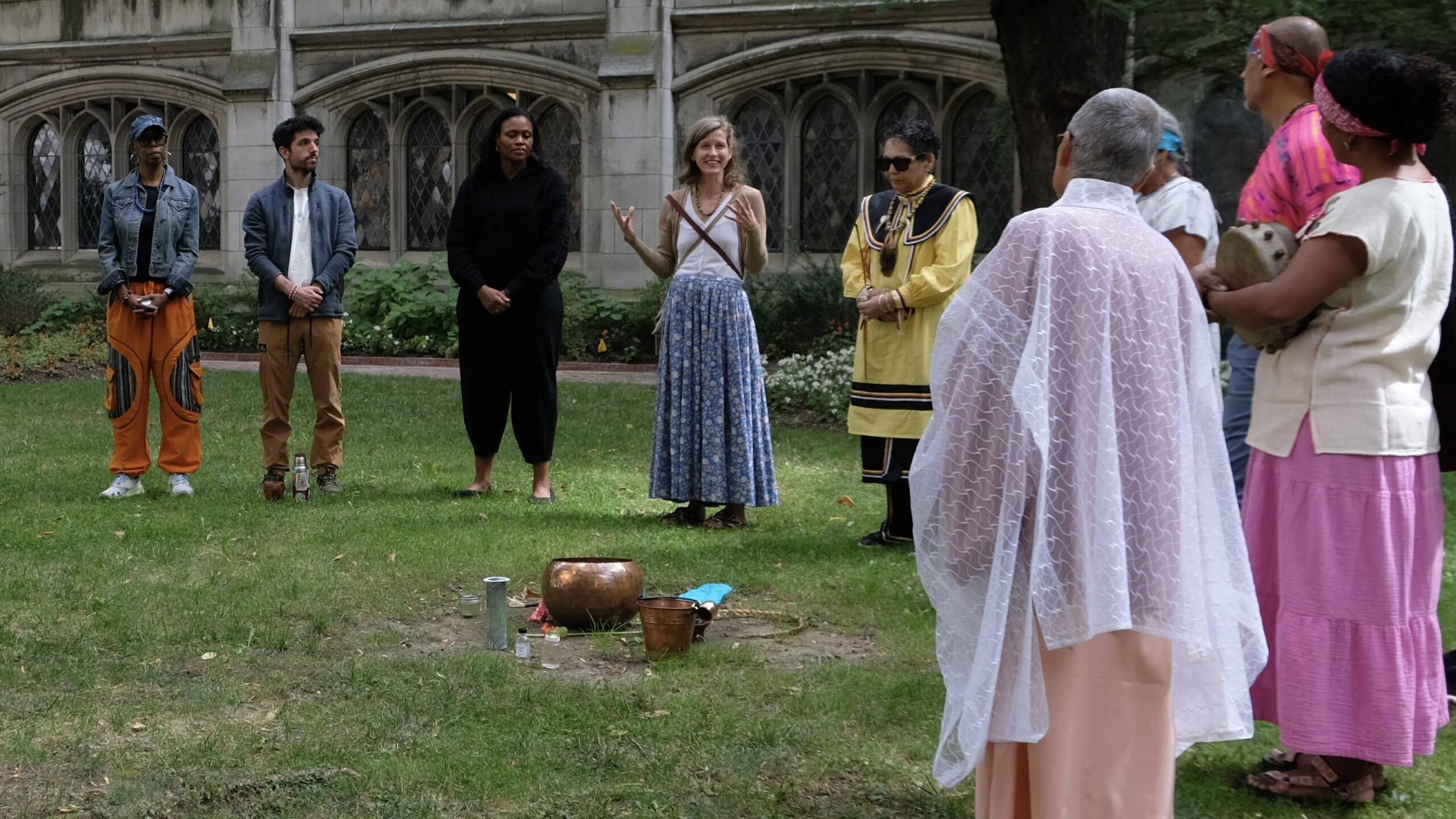
The same morning that the water walk began with a ceremony on Arctic Lake, the Center for Earth Ethics organized a ceremonial gathering in New York City in solidarity. Participants contributed water to a shared vessel which they carried from Union Seminary to the pier at 125th Street as an offering to the river.
Clara Soaring Hawk, an elder and ambassador from the Ramapough Munsee Lenape Nation, shared a prayer at the NYC gathering:
May we never take water for granted. May we honor its journey, remember its sacredness, and carry its teaching forward through our words, our actions and our lives. Let us protect the water—not only in ceremony, but in every choice we make. Let us keep it clean, defend its sources, and teach those who come after us that water is not a possession. It is a sacred responsibility we share.
Two days after the Women’s Water Walk ended on October 4, walkers delivered some water from the copper pail to the Governor’s office in Albany. CEE Executive Director Karenna Gore, who participated in the walk and was involved in the 2016 pipeline opposition, spoke at the press conference. She urged Governor Hochul to “stand firm against the Constitution Pipeline. Stand up to profiteers, grifters and bullies. Stand for clean air, water, land and energy.”