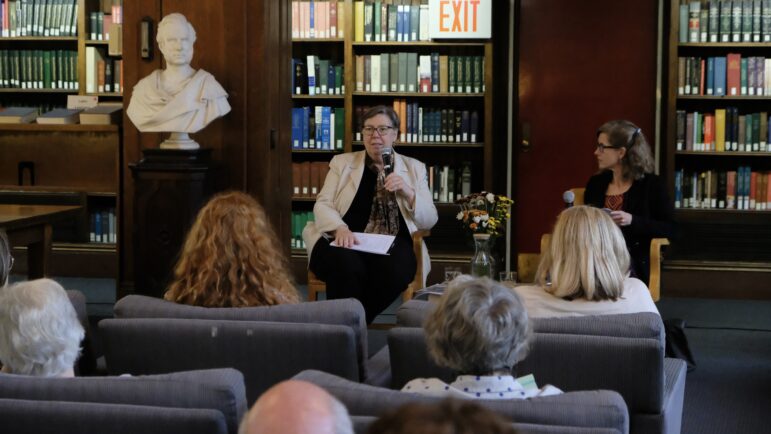
Noting that the “plastics issue is so difficult to talk about,” Gore had only praise for “The Problem with Plastic.” “I love this book,” she said. “It’s beautifully written, funny, sensible.”
The facts about plastics are truly depressing. Since 1950, plastics production has increased massively, reaching 450 million tons this year and projected to increase 300 percent by 2060. “About 42% of plastics is single-use packaging,” noted Enck, and less than 6% of plastics is recycled in the United States.
It is impossible to separate the plastics problem from the fossil fuel problem. There’s “a lot of fracked gas on the market, and that’s why we have so much plastic,” said Enck. “Plastics are Plan B for the fossil fuel industry.”
Enck outlined the myriad ways plastics damage life. “People being poisoned by the production of plastics,” she noted, especially in Louisiana’s “Cancer Alley,” Texas, and Appalachia, where most plastics in the United States are manufactured. But plastics pose catastrophic dangers for consumers as well. Microplastics have entered all of our bodies, and chemicals contained in plastics have entered our bodies alongside them. Microplastics have been detected in human placentas. “Babies are being born pre-polluted,” she said.
Plastics are Plan B for the fossil fuel industry.
Despite this grim diagnosis, “The Problem with Plastic” does not fall into despair. It’s full of practical advice for readers, ranging from conducting plastics audits of home kitchens to opportunities for political action. Enck invited guests to participate at protests in front of New York City Starbucks the weekend after the event.
Ultimately, however, “the solution is making less plastics,” said Enck. And that “is only going to happen with new laws and environmental regulation.”
Formidable lobbying from the fossil fuel industry and plastics producers opposes both legislation and regulation, but Enck remains optimistic that we can reach Beyond Plastics’ goal of reducing plastics production by 30% in 12 years. “All we have on our side are facts and public support,” says Enck.
“What does it cost not to deal with the problem?” agreed Gore.
“Plastics pollution is not going away, and neither are we,” said Enck. “I’m actually optimistic that we’re going to turn the tide on plastics.”