Toward a World Beyond Plastics
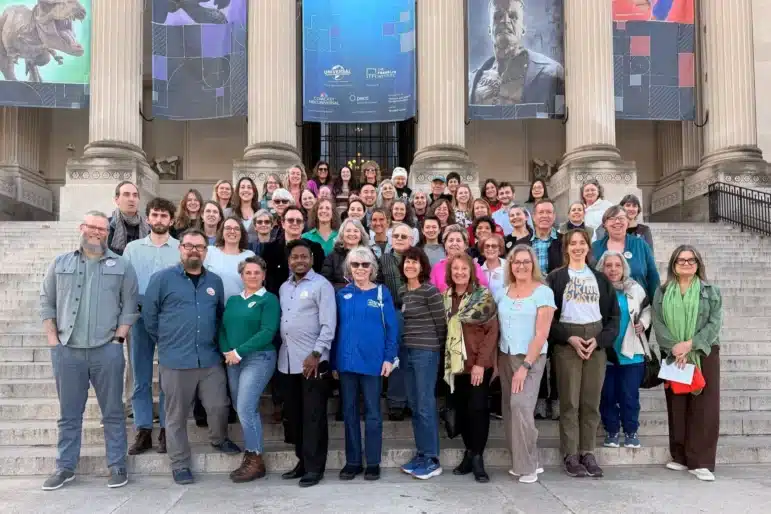
On Saturday, March 21, advocates, organizers and community leaders from across the northeast gathered in Philadelphia for the Beyond Plastics Regional Conference, under the theme, Radical Optimism for a World Beyond Plastics. The day brought together frontline community members, environmental justice advocates, policy leaders and grassroots organizers to share wins, deepen strategy and strengthen the regional network working to end plastic pollution.
The Problem with Plastics
Judith Enck, founder of Beyond Plastics and former EPA Regional Administrator for Region 2, gave an overview of The Problem with Plastics. Plastics are made from fossil fuels, processed through cracker facilities, like Shell’s plant in Beaver County, Pennsylvania, into the tiny pellets known as nurdles that are the raw material for nearly all plastic products. About 33 billion pounds of plastic enter the ocean every year, and by 2050, plastic could outweigh all the fish in the Earth’s oceans.

Enck outlined major climate impacts: in 2019, plastic production alone accounted for 5.3% of total global greenhouse gas emissions, nearly four times the emissions of the entire global aviation industry. As demand for fossil fuels declines in energy and transportation, the industry is pivoting to plastic production to sustain itself. This shift is entrenching further concentration of production facilities in the Gulf South—and local communities, already living with the health toll of the petrochemical industry, are paying the price.
Global plastic production has grown more than 200-fold since 1950, and the industry shows no sign of slowing: production is projected to increase by 70% between 2020 and 2040. Researchers have now identified over 16,000 chemicals in plastics—more than a quarter of which are known to be hazardous to human health or the environment—and two-thirds of those chemicals have never been tested for safety.
Beyond Plastics has published The Pocket Guide to Plastics—a regularly updated reference guide covering everything from plastic’s chemical makeup, the harms on human and environmental health, its climate impact, and the myth of recycling. Enck expands on all of these points in her new book, The Problem with Plastics, and through a seven-week course at Bennington College, open to the public via Zoom.
How Communities Are Fighting Back
Communities across the United States are fighting back against the plastics industry through local organizing, litigation and legislative work. The Beyond Plastics gathering highlighted organizing in the Northeast.
In New York, the fight is at the legislative level. Beyond Plastics is pushing hard for passage of the Packaging Reduction and Recycling Infrastructure Act (PRRIA) (A1749/S1464), introduced by Senator Pete Harckham and AssemblywomanDeborah Glick. The bill would require companies that sell packaged goods to reduce single-use packaging by 30%, remove some of the most toxic chemicals used in packaging, and reimburse municipal governments for waste management costs. For New York City alone—which spent $1.7 billion in 2024 exporting its garbage to landfills and incinerators as far away as South Carolina—the bill is estimated to save $114 million a year in avoided collection and disposal costs, with a further $266 million in annual reimbursements from producers.
Addressing these problems will require a surge of political will—and politicians willing to stand up to the petrochemical industry. At a moment when the federal government is rolling back environmental protections, the case for local and regional organizing has never been stronger.
In New Jersey, the Beyond Plastics state group has demonstrated what sustained grassroots organizing can achieve at scale. Years of passing local ordinances—plastic bag bans, balloon release bans, straw bans and construction dust containment ordinances—ultimately built the momentum for a statewide Skip the Stuff law.Signed in January 2026, this landmark legislation requires restaurants to provide utensils and condiments only when customers ask for them.
Three Rivers Waterkeeper‘s Heather Hulton VanTassel gave an update from western Pennsylvania,highlighting a Clean Water Act lawsuit filed against Styropek, a plastics manufacturer whose facility sits at the confluence of Raccoon Creek and the Ohio River in western Pennsylvania. For more than a year, advocates patrolled the river, documenting plastic pellet pollution entering the river. This work paved the way for the lawsuit, which resulted in a precedent-setting $2.6 million settlement that requires the company to eliminate pellet discharge in waterways.
The fight in Pennsylvania is also taking place in the air. Chester, PA, where one-third of Philadelphia’s trash is incinerated at the ReWorld facility, has childhood asthma rates more than four times the national average. For every three pounds of garbage burned, nearly one pound becomes toxic ash that re-enters the environment and can contaminate the food chain. This incineration produces far more greenhouse gases than almost any other form of waste management. Chester is a majority Black, low-income city that has become a dumping ground for the region’s waste, following a grim nation-wide trend: seventy-nine percent of municipal solid waste incinerators in the U.S. are located in low-income communities and communities of color. Chester Residents Concerned for Quality Living are campaigning to shut down the ReWorld incinerator and to pass the Stop Trashing Our Air Act—legislation introduced by Philadelphia City Councilmember Jamie Gauthier that would end the city’s practice of sending its trash to be burned in Chester.
Get Involved
Plastics pollute the air, water and land through their entire lifecycle, from production to disposal. Addressing these problems will require a surge of political will—and politicians willing to stand up to the petrochemical industry. At a moment when the federal government is rolling back environmental protections, the case for local and regional organizing has never been stronger. Beyond Plastics coordinates a national network of groups working on these issues at every level, from municipal ordinances to state legislation. Find your local group at beyondplastics.org.
To learn more about the Center’s work on the issue of plastics, watch our webinar with advocates against “sacrifice zones” ahead of INC-4 or read our policy note, “Plastics: From Innovation to Catastrophe.” For further resources, click here.