
A Field of Many Possibilities
Reflections on 30 Years of Religion and Ecology
Before coming to Union Theological Seminary, I worked at Sterling College in Vermont, where environmental protection, outdoor skills, expeditions and farming were part of how I learned to understand the world. When I came to Union, I brought that background into conversation with my growing interest in eco-chaplaincy. What might it mean and look like to care for the Earth as a chaplain? Would it mean caring for environmental activists who are experiencing exhaustion and grief, supporting communities after ecological disasters, caring for animals, or helping people find spiritual meaning in their relationship with the natural world? The more I thought about it, the more expansive the questions became. Even the words “religion,” “nature,” and “ecology” seemed to contain more than I could easily define.
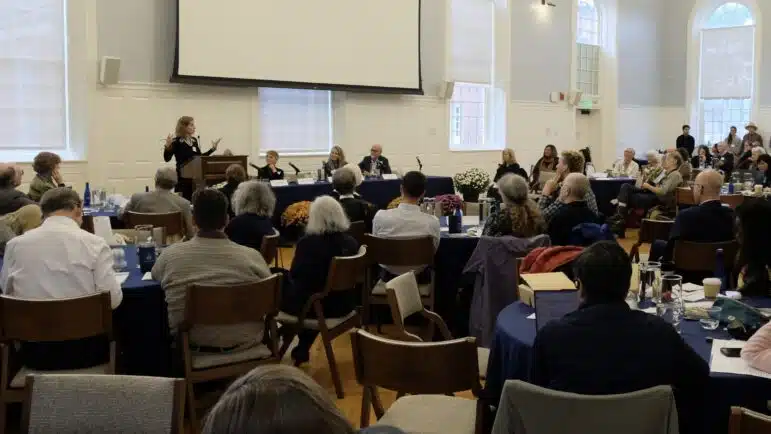
These questions were part of what brought me to the Center for Earth Ethics— and to “Celebrating 30 Years of Religion and Ecology,” the Yale Forum on Religion and Ecology’s 30-year anniversary conference on October 16. I arrived, still trying to understand the field. I left with a sense of how many people were already working within it and an appreciation for their different approaches to the questions that had brought me there. What struck me most was the feeling of a network: people working across scholarship, activism, spiritual practice, education and community organizing—each contributing something different to a shared conversation.
The gathering began with Darlene Kascak, educational outreach ambassador for the Schaghticoke Tribal Nation, whose words about Indigenous knowledge challenged us to reconsider our relationship with the living world. She encouraged us to truly see rather than merely look and that we are part of living communities rather than separate from them.
It felt like an important way to begin the conference. Before asking what our traditions can teach us about the Earth, perhaps we must reconsider the assumptions through which we have learned to understand both religion and ecology in the first place. Whose knowledge have we learned to recognize? Whose understanding of the sacred has been overlooked? And what becomes possible when we see ourselves not as observers of the natural world, but as participants in it?
What becomes possible when we see ourselves not as observers of the natural world, but as participants in it?
Xiao Ma
Throughout the day, I came to appreciate a conversation I had with Sam King of Yale Forum some time ago, in which he described Mary Evelyn Tucker and John Grim as great waves in an ocean, pushing new ideas and people forward. Thirty years ago, the academic study of religion and ecology only existed in seed form. Today, as Tucker and Grim noted in their opening remarks, there are more than 30 graduate programs in religion and ecology in North America, alongside hundreds of grassroots projects and interfaith initiatives worldwide. With the help of many scholars and activists, they wrote, “a new field of study in academia and a moral force for change in society was born.”
Tucker and Grim’s work has helped create a space where people from all walks of life can gather, learn from one another and pursue their own questions. And the range of people gathered made clear that their work had become larger than any single institution or individual. Their contribution was visible in the conversations around the room, in the projects people brought and in the many possibilities now available for someone like me to enter into this work.
Yale Divinity School’s Living Village, a regenerative student residential complex, shows what the principles they teach look like in action. I appreciated seeing a theological institution attempt to implement ecological commitments into practice in the very spaces where students live. The building’s details caught my attention: FSC-certified wood (sourced from responsibly managed forests that meet the Forest Stewardship Council’s standards), bird-safe glass, pawpaw trees, diverse plantings and systems for managing greywater and blackwater. Alongside the farm-to-table approach they practice through their collaboration with YDS farm, these details made me think about how ecological ethics might shape the ordinary rhythms of daily life. Sustainability is not only something to discuss in a classroom—it shapes the design of a building, the food people eat and the land and resources they share.
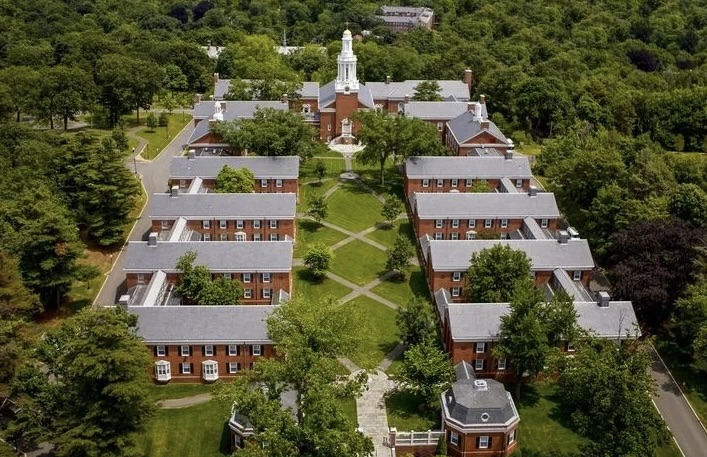
I found this especially exciting because I am interested in what it means to bring spiritual care into a relationship with the Earth. What would theological education look like if the environment in which students live were also part of how they learned to care for the natural world? The Living Village is not perfect, and the presenters emphasized repeatedly that it is an evolving work in progress, not a finished product. In that sense, it is truly “living,” changing, growing and evolving. The Living Village offered all of us a glimpse of the radical possibilities for actively embodying ecology.
Other presentations expanded that sense of possibility. Dekila Chungyalpa spoke about working with religious communities, including Tibetan Buddhists, around ecological engagement, while Chantal Elkin shared work connecting faith and nature through the World Wildlife Fund. Fletcher Harper of GreenFaith spoke passionately about movement-building and the struggle against fossil fuel development in East Africa, emphasizing that money alone is not the issue; community and commitment matter.
Lisa Dahill’s Wild Sanctuary brings people into the woods to encounter the natural world; Blair Nelsen’s Waterspirit explores the connections between water and spirituality. Conversations about Jim Robinson’s 2025 book, “Beyond Factory Farming,” offered another strong suggestion for how religion and ecology must confront the systems that embed ecological harm in our everyday lives.

CEE Executive Director Karenna Gore gave this diversity a deeper significance during the session on ecotheology and eco-justice in graduate education. She reflected on how her work developed through relationships with communities and movements, as well as with scholars, emphasizing the importance of remaining in close contact with the creative energy that lives outside of the academy. She recalled attending the fiftieth anniversary of the historic marches in Selma, Alabama, where she met people who later entered her classrooms, and a few years later, during the Indigenous-led movement at Standing Rock, when she spent time with the movement and was also able to host people from the Standing Rock Sioux Nation back at Union, where they spoke with students.
Gore suggested that the work of educating students in degree programs should maintain an open channel to the ways these issues are experienced and articulated in the public square, reminding us that breakthroughs in public discourse often come from social movements themselves. “We’re not protesters, we’re protectors,” she said, recalling the words of Standing Rock water protectors: Expressions like “water is life” and “defend the sacred” carry a moral, spiritual and ecological force that owes nothing to the academy.
Just as autumn invites us to look back as leaves fall, it also holds the promise of what is still to come. These gatherings are opportunities to plant seeds for a future in which religious traditions can bring their wisdom into a new understanding of humanity’s place within the unfolding cosmos and the living Earth community.
John Grim
While acknowledging the important legacy of Larry Rasmussen at Union, she also referenced some major scholarly influences on the work of the Center for Earth Ethics that came from outside the field of religion and ecology: Rev. Dr. Liz Theoharis, a Bible scholar and anti-poverty activist who started the Kairos Center for Rights, Religion and Social Justice, Father John McGuckin, an Orthodox priest who taught Early Eastern Christian Spiritualities and founded and ran the Sophia Center, Gary Dorrien, who currently holds the Reinhold Niebuhr chair in Christian Social Ethics, and Dr. James Cone, often referred to as the father of Black Liberation Theology, who challenged the environmental movement to be in deep conversation with the Black Freedom movement in his seminal 2000 essay “Whose Earth is it Anyway?”
Gore closed by stating that while Union does not yet have a specific degree program, the work on eco-justice is very much alive and in process there and that there is also progress made in engaging in interdisciplinary work, including through Columbia University’s Climate School, where she is teaching this semester. Gore cautioned against the academy’s tendency to claim or reduce the work of movements by translating them into academic frameworks, privileging who writes about a movement over the people who live it. What does this mean in the context of studying ecological justice? As students and scholars, we can spend so much time learning to interpret the world that we risk forgetting to ask whether our interpretations serve the people and places we study. Scholarship matters, but it cannot be the only measure of meaning. Gore reminded me that this history also belongs to the movements and communities that have continually challenged the field to think differently. A field can grow in size and influence while still needing to ask whose voices it recognizes, whose knowledge it draws upon and to whom it is accountable.

The intergenerational conversation reflected in “The New Ecozoic Reader: Critical Reflections, Stories, Dream Experiences & Practices for an Ecological Age,” a new online magazine edited by King and Sam Mickey, speaks to this continuing development. With an introduction by Tucker and Grim, the special issue brings together established and emerging voices to reflect on the past, present and future of religion and ecology. These different generations and approaches are essential. The field is not a finished body of knowledge that one generation simply passes to another. It is an ongoing conversation that must remain open to new questions, different experiences and possibilities that may not yet have names.
After the conference, I asked Tucker what it felt like to look back on 30 years of religion and ecology, and what she hoped to see in the next 30. She described the gathering as a “watershed,” marking how far the field had come: from having neither an established academic presence nor a moral force for eco-justice to a burgeoning network of graduate programs and grassroots religious projects around the world. “Our task in looking ahead,” she said, “is to grow this even larger and to deepen the spiritual foundation as well.”
Grim offered another image to help think about this history. Writing about the autumn gathering, he reflected on how the field might plant seeds for a transformative vision of human-Earth relations. “Just as autumn invites us to look back as leaves fall, it also holds the promise of what is still to come.” “These gatherings,” he suggested, “are opportunities to plant seeds for a future in which religious traditions can bring their wisdom into a new understanding of humanity’s place within the unfolding cosmos and the living Earth community.”
Sam King emphasized:
It was a joy to celebrate the emergence of the academic field and moral force of religion and ecology over the last 30 years,” he wrote. “Against great odds, this heroic community of religious scholars, practitioners, and students has nurtured diverse ethical visions of the Earth as a sacred community of life, and our responsibility to be good caretakers for the future generations of all species. At a time of polycrisis and ecological grief, it was a healing balm to be together and renew our hopes for a more just, resilient and flourishing Earth community.
I carried both reflections with me as I thought about my own place in this field. I still do not know exactly where my interests in spirituality, ecology, art and care will lead me, or what eco-chaplaincy might become in my own practice. But I left Yale with a stronger sense of possibility. Perhaps the gift of these 30 years is not only that a field has grown, but that it has made room for others to begin. For those of us arriving now, that history is both an inheritance and an invitation: to find our own ways into the work, and to remember that we do not have to do it alone.
