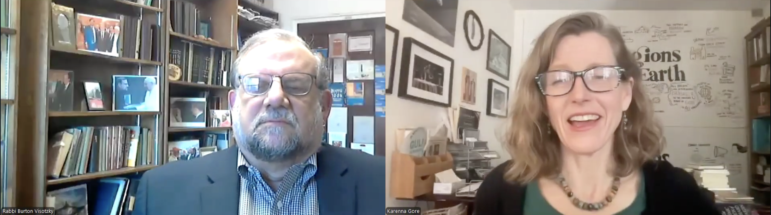
On March 9, CEE Executive Director Karenna Gore was a featured speaker in Seasons of Responsibility: Interreligious Conversations on Environmental Justice and Repair, an online learning series hosted by Jewish Theological Seminary that explores responsibility, agency and repair in the face of urgent ecological challenges. Her session, “Seasons of Reckoning: The Practice of Moral Accounting,” featured conversation with Rabbi Burton L. Visotzky, JTS Professor Emeritus and CEE Advisory Board member.
Their wide-ranging discussion highlighted theimportance of religious and spiritual traditions in framing the climate crisis as a moral and ethical issue—and in dispelling the “illusion” that humans are separate from nature:
“We have to do some systemic change. The way that I like to understand this is in terms of cause and effect. If you’re always acting at the level of effect of a problem, but you’re not looking at the cause of it, you’re gonna you’re going to keep yourself busy, but you’re going to perpetuate the problem. And I think that that’s the case with many environmental issues. And a lot of people that are invested in keeping the system the way it is want to keep us focused on the effects. But if we go to the deeper level of cause we can see that the cause is spiritual. And fundamentally, it’s this illusion that we have, that human beings are separate from nature. But that’s an illusion. Spiritual teachings across traditions can help us remember that we are one with nature—that this is all one creation.”
The conversation series also featured a session with CEE Strategic Advisor Roberto Múkaro Borrero. On February 9, Rabbi Stephanie Ruskay, for a conversation entitled “Indigenous Leadership and Ecological Responsibility.” A recording of the session is available here.
Ned Joyner
Ned Joyner, MDiv, is the communications manager at Center for Earth Ethics.