
Indigenous Leaders to Discuss Water Ethics on October 7
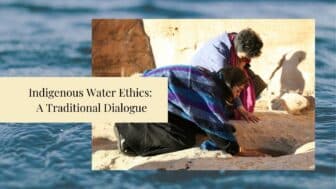
Indigenous Water Ethics: A Traditional DialogueThursday, October 7, 20219 a.m. Los Angeles | 12 p.m. New York | 6 p.m. Paris REGISTER TODAY Water is fundamental to all life on

Indigenous Water Ethics: A Traditional DialogueThursday, October 7, 20219 a.m. Los Angeles | 12 p.m. New York | 6 p.m. Paris REGISTER TODAY Water is fundamental to all life on

More than 800 million people worldwide could go hungry by 2030. At the same time, agriculture accounts for a quarter of greenhouse gas emissions and agricultural practices damage global biodiversity.

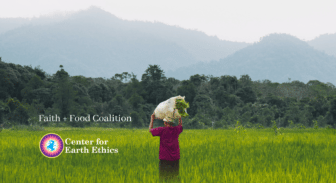
Friday, September 17, 2021 Our story of food is one of sacred joy. Interconnectivity. Dignity. Empathy. These values are enshrined in faith, non-faith, spiritual, and Indigenous traditions’ understanding of food.

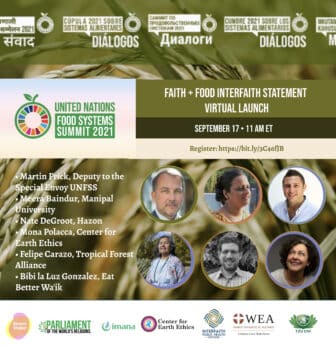
“Food is both a building block of life and a basic human right.” This fundamental truth underpins the “Interfaith Statement” for the United Nations Food Systems Summit, which will be

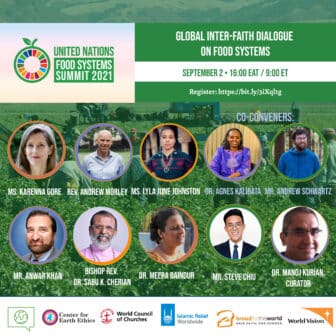
Access to food is a human right, but it remains out of reach for far too many. On Thursday, September 2, at 4 p.m. East Africa Time (9 a.m. Eastern

What are the impacts of our global food systems on people and the planet? What can we learn from Indigenous communities and traditional food practices? How can a respect for

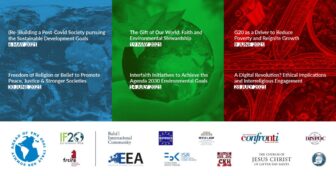
On Wednesday, July 14, Karenna Gore, executive director of the Center for Earth Ethics, was a panelist at a webinar, “Interfaith Initiatives to Achieve the Agenda 2030 Environmental Goals,” sponsored

The United Nations Environment Programme has accredited Union Theological Seminary through the Center for Earth Ethics. Accreditation grants Union observer status and other privileges at the United Nations Environment Assembly