
“All of the Above” is Not a Solution: NESE Pipeline Undermines New York’s Climate Commitments
Editor’s Note, 1/20/26: Since publication of this piece, there have been significant developments regarding Empire Wind and other major offshore wind projects in the U.S.
Empire Wind is referenced below as a high-stakes renewable energy project for New York, for which Governor Hochul may have traded approval of the NESE pipeline earlier this year. This followed a Trump Administration stop-work order issued in May 2025, which cited inadequate environmental review under the Biden Administration.
Despite these negotiations, on December 22, 2025, the federal government again indefinitely paused Empire Wind, along with four other major offshore wind projects on the East Coast, arguing that they pose national security concerns due to potential interference with military radar systems.
In response, the developers of the wind farms—Ørsted, Equinor, and Dominion Energy—sued the Trump Administration, arguing that the projects had already undergone extensive review, that billions of dollars of investment were at stake, and that the projects might not remain viable in the face of prolonged delays. In Equinor’s case, the company indicated that the project was 60 percent complete and that it had already invested more than $4 billion.
During the week of January 12, 2026, three separate federal judges issued injunctions citing insufficient evidence of national security concerns, allowing the companies to resume construction on their offshore wind projects.
On February 2, a U.S. District Court will assess Ørsted’s request to continue work on its project off the coast of New York.
As climate negotiations were underway at the United Nations Climate Conference (COP30) in Brazil last month, the lack of U.S. climate leadership was glaring. That was not only true there, but also at home.
Just before the commencement of COP30, New York State gave the green light for the first new gas pipeline in at least a decade. The Northeast Supply Enhancement (NESE) pipeline imperils sensitive marine ecosystems and is a dramatic reversal of the state’s climate goals enshrined in its 2019 landmark climate legislation. At a time when subnational leadership is critical to our ability to stay the course for climate action, this represents a discouraging lack of resolve from New York.
Meanwhile, the Presidency of COP 30 included the Global Ethical Stocktake (GES): an innovative initiative designed to call leadership at all levels to deeply consider the moral, ethical, philosophical and cultural dimensions of the climate crisis.
A central question of the GES is: if we know what we need to do to stave off ecological catastrophe, why aren’t we doing it? The NESE case underscores this point. Why is New York, one of the most progressive states in one of the most developed and wealthy nations of the world, backsliding on its goals to dramatically cut its greenhouse gas (GHG) emissions? And what do ethics and faith and wisdom traditions tell us is the way forward?
The Global Ethical Stocktake was led by Marina Silva, the Brazilian minister of the environment and climate change, and first announced by the President of COP 30 Andre do Lago in his Second Letter from the COP30 Presidency, in which he articulated a goal to “elevate global awareness through inclusive dialogues across diverse regions, bringing together political, intellectual, academic, cultural, and religious leaders, alongside voices from all sectors of society.”
The third question of the Global Ethical Stocktake draws our attention to the central role of fossil fuel extraction and combustion: What can we do to ensure that rich countries, major producers, and consumers of fossil fuels accelerate their transitions and contribute financing for these measures in the most vulnerable countries?
Stumbling Climate Leadership in New York State
The NESE pipeline approval is such a disappointment to climate activists, in part, because New York State has been considered a climate leader.
The 2019 New York State Climate Leadership and Community Protection Act (Climate Bill) is one of the most ambitious climate laws in the nation, with the goals of reducing greenhouse gas emissions (GHG) 40% from 1990 levels by 2030 and 85% by 2050. In addition, in an important win for climate justice, the law established that disadvantaged communities must receive a minimum of 35% of investments. This kind of bold leadership at the state level is needed particularly in the face of federal retreat from climate action.
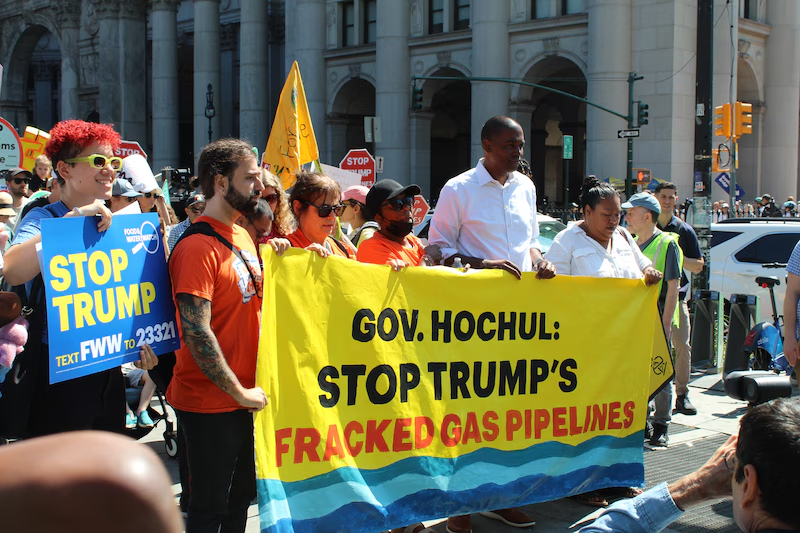
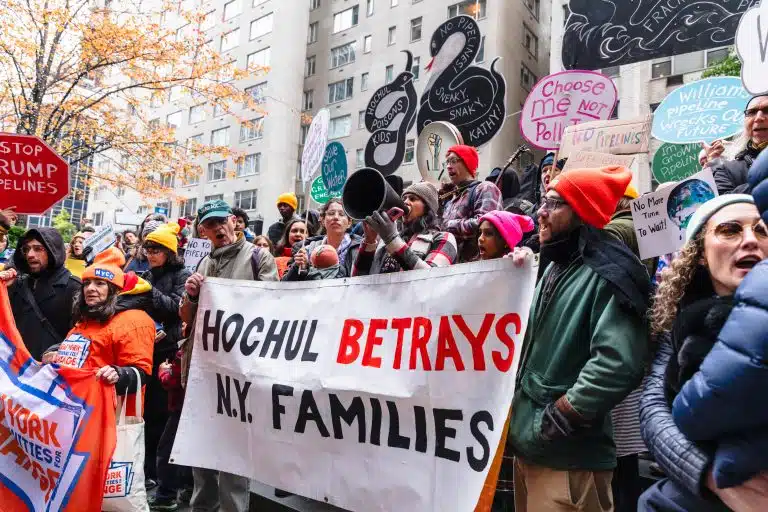
However, New York State is now backing off on its climate goals citing “global economic issues, supply chain disruptions, and geopolitical developments” (NY State Climate Act Dashboard). The NESE pipeline is a significant misstep. Citing contested claims about energy reliability and affordability, Governor Hochul describes her new strategy as embracing an “all of the above” approach to energy policy that would include oil and gas in addition to clean energy sources. With the NESE pipeline, Hochul has revealed that her “all of the above” approach also includes building out new fossil fuel infrastructure that will lock the state into decades more of fossil fuel reliance, with significant long-term costs to the planet and public health.
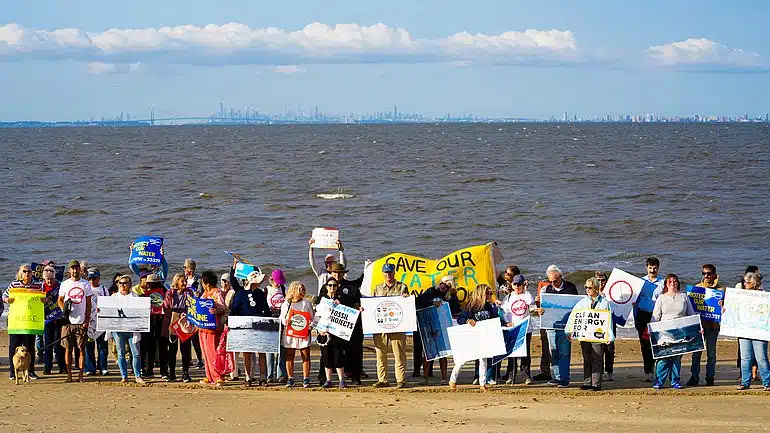
The project fails to consider the needs of non-human species in sensitive marine ecosystems that would be impacted in New York Harbor.
A Dirty Deal
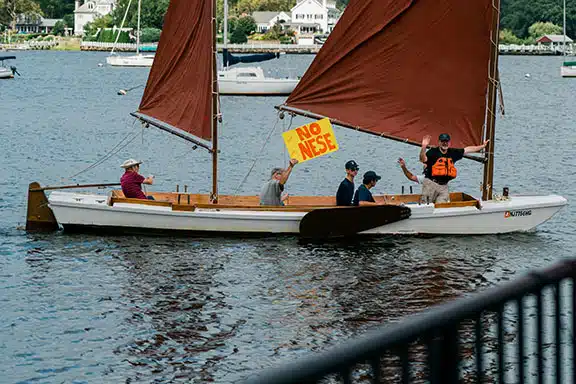
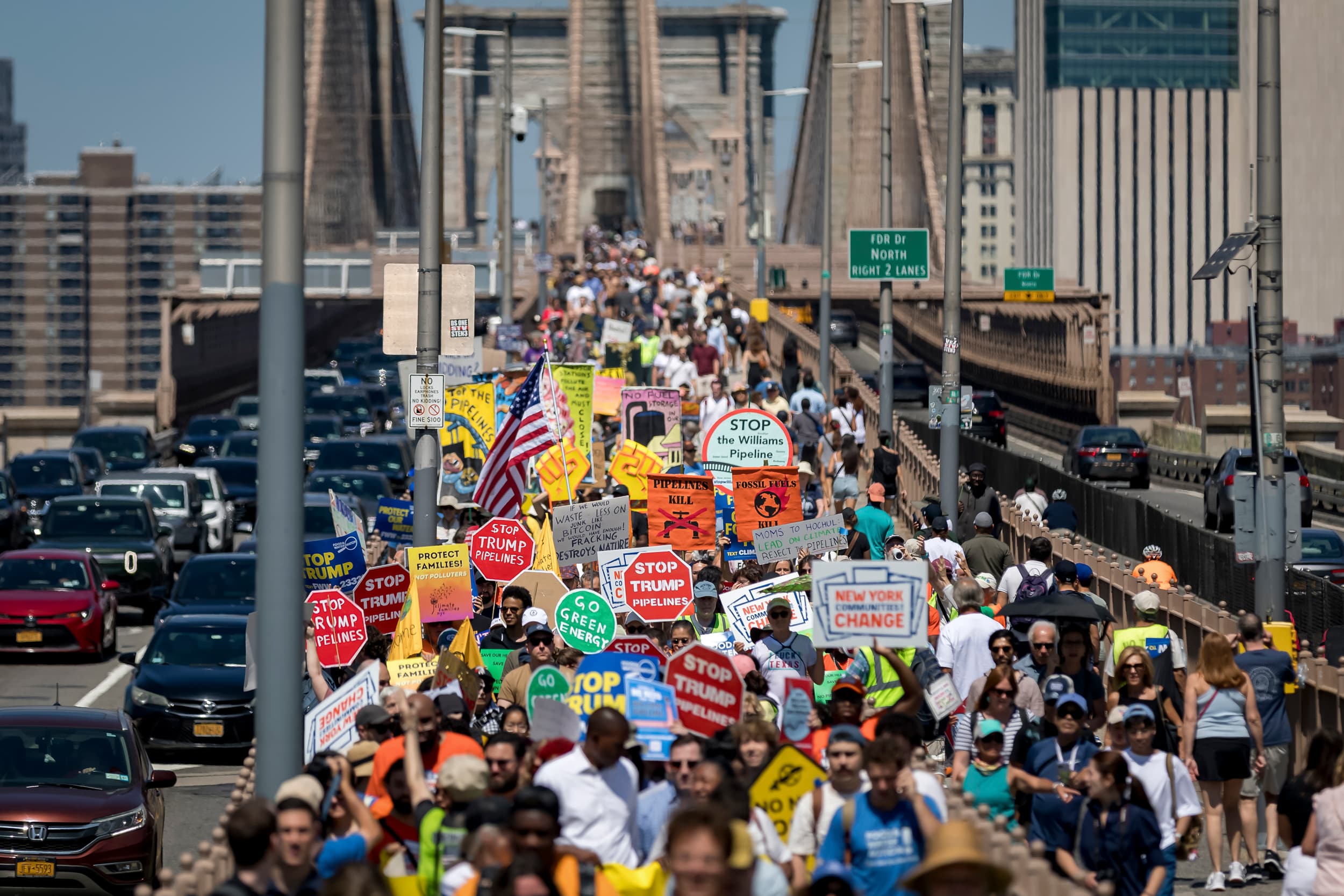
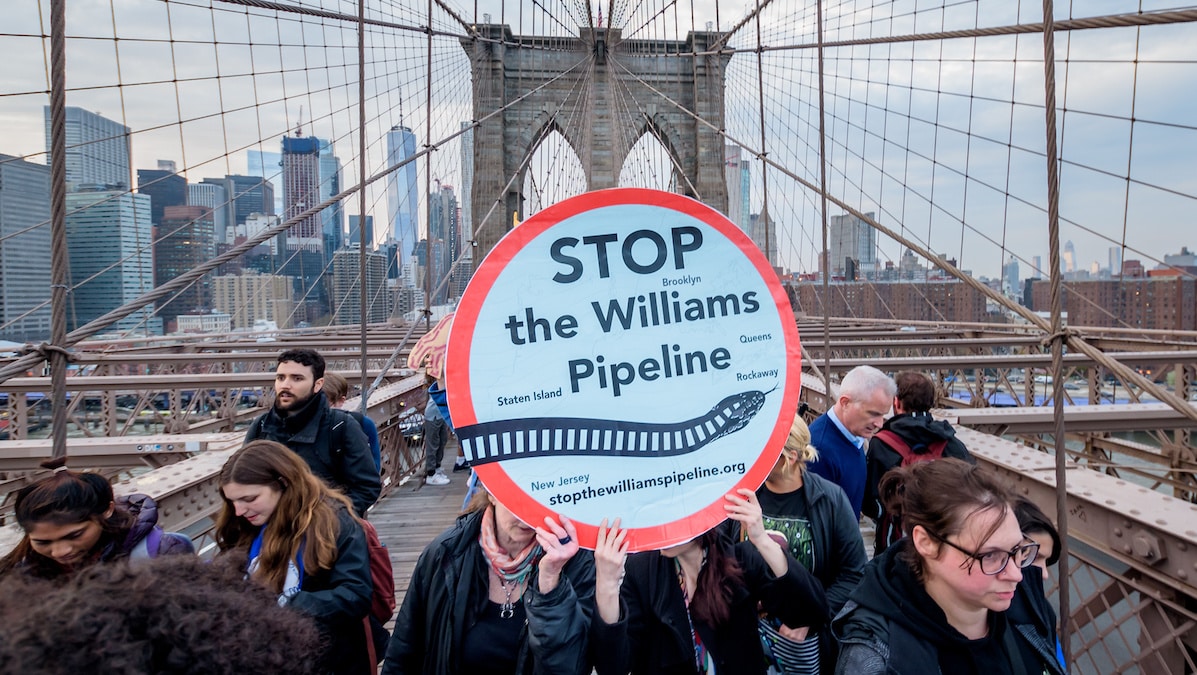
The NESE pipeline is proposed by Transco, a subsidiary of Williams Company, and has been debated—and repeatedly defeated—for nearly a decade. The pipeline would run 30 miles from New Jersey to the Rockaways (in Queens), including trenching 23 miles of pipe through sensitive marine ecosystems in New York Harbor. Critical water quality permits were rejected three times by the New York State Department of Environmental Conservation (NYS DEC) due to concerns about the impacts on the marine environment. In explaining its decision, NYS DEC stated that the pipeline’s “construction would dredge up mercury, copper, and other decades-old contaminants dumped off the coast of the city, endangering marine life.”
In addition to the impact on marine habitats, the NESE pipeline is inconsistent with New York’s Climate Bill and its targets for reducing GHG emissions and converting to electric power. Since passage of the Climate Bill, New York has pursued an ambitious strategy of building out renewable energy infrastructure, such as major wind and solar projects. For example, Empire Wind, a large wind project off the Long Island coastline, has the potential to power the equivalent of 700,000 homes. The state has coupled its focus on renewables with halting large fossil fuel projects, denying permits for a proposed new power plant in Queens (Astoria Gas Turbine Power, LLC) and an expansion of an existing power plant in Newburgh (Danskammer Energy). Regulators cited inconsistency with the climate targets set forth in New York’s Climate Bill as a major factor in the denial of permits.
So why did New York State reverse course with the NESE pipeline?

Trump 2.0
With the onset of the second Trump administration, the political and financial landscape of climate action has dramatically changed. President Trump again pulled the United States out of the landmark 2015 Paris Climate Agreement, defunded environmental programs, and gutted the Environmental Protection Agency, the National Oceanic and Atmospheric Administration, and the U.S. Fish and Wildlife Service.
As during the first Trump administration, the current federal retrenchment on climate has left a leadership vacuum that state leaders must fill. During Trump’s first term, 24 states and territories banded together to form the US Climate Alliance and continued pushing forward ambitious climate goals as a coalition determined not to let Trump slow down essential climate action.
However, the second Trump administration is markedly more unrestrained in aggressively advancing fossil fuel production and pulling back funding and approvals for clean energy projects. In April, Interior Secretary Doug Burgum issued a stop work order for the Empire Wind project, threatening its viability. In May, the stop work order was lifted following a meeting between Secretary Burgum and Governor Hochul. Afterwards Burgum said he was pleased with Hochul’s “willingness to move forward on critical pipeline capacity,” leaving many critics to believe that Hochul traded the approval of the NESE pipeline in exchange for clearing federal obstacles to the Empire Wind project.
Many critics believe that Hochul traded the approval of the NESE pipeline in exchange for clearing federal obstacles to the Empire Wind project.
Action in the Courts
The courts offer some hope for climate activists seeking to hold the line for New York State’s climate goals. In late October, a state supreme court judge in Ulster County ruled that Governor Hochul must take actions to ensure that New York will meet the goals in its Climate Bill, giving the Governor until February 6 to demonstrate through regulatory action how it would do so. (Hochul appealed the court ruling in late November.)
In addition, a coalition of nonprofits led by attorneys from Earth Justice and NRDC are suing the Hochul Administration for DEC’s backpedaling in granting the necessary water quality permit for the NESE pipeline after denying it two times previously.
Action Rooted in Ethics, Faith and Justice
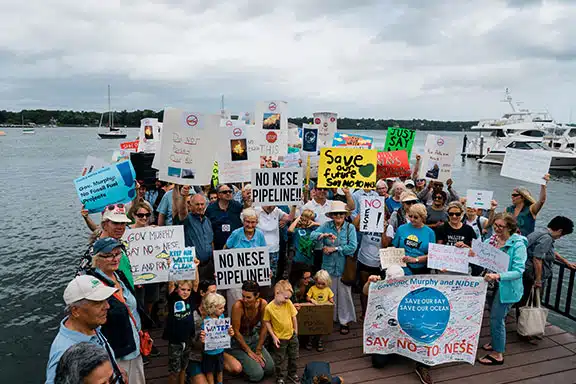
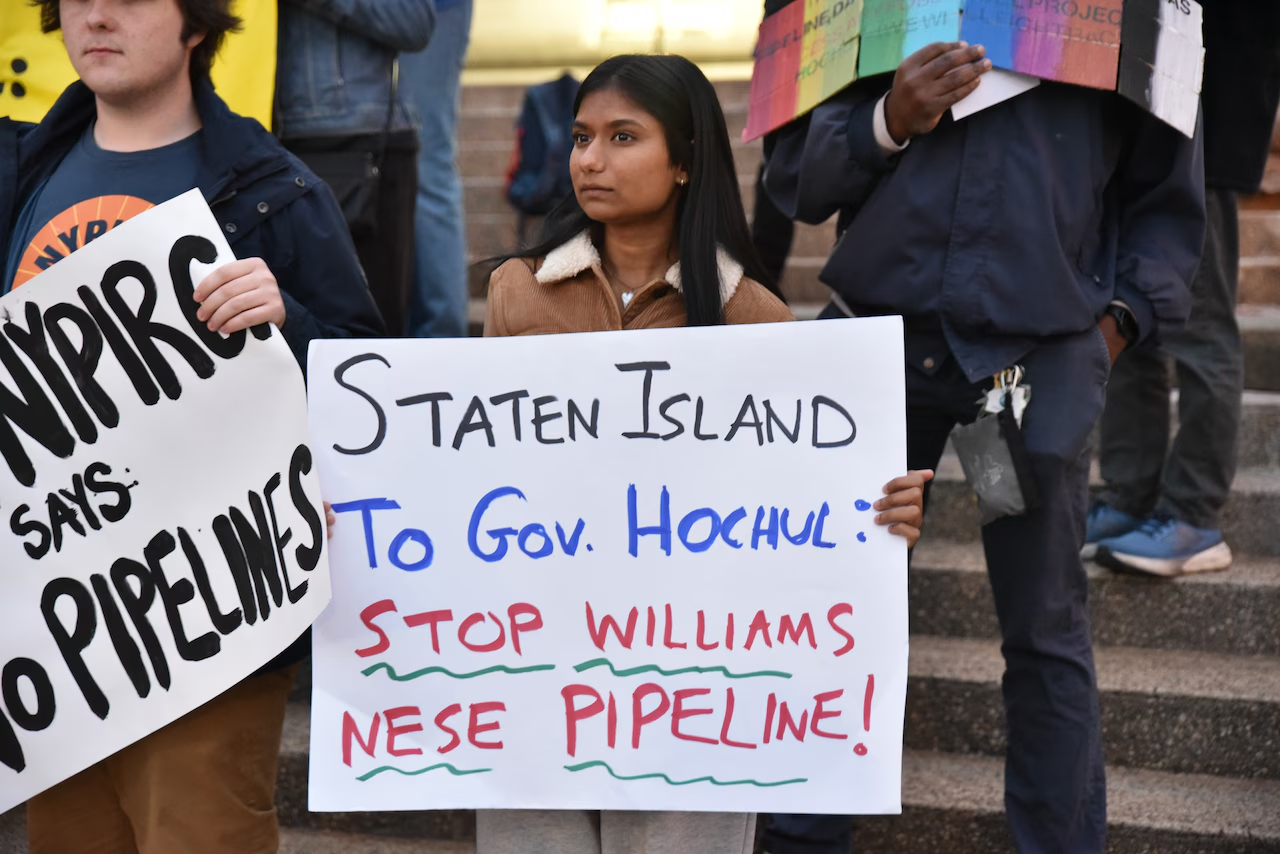
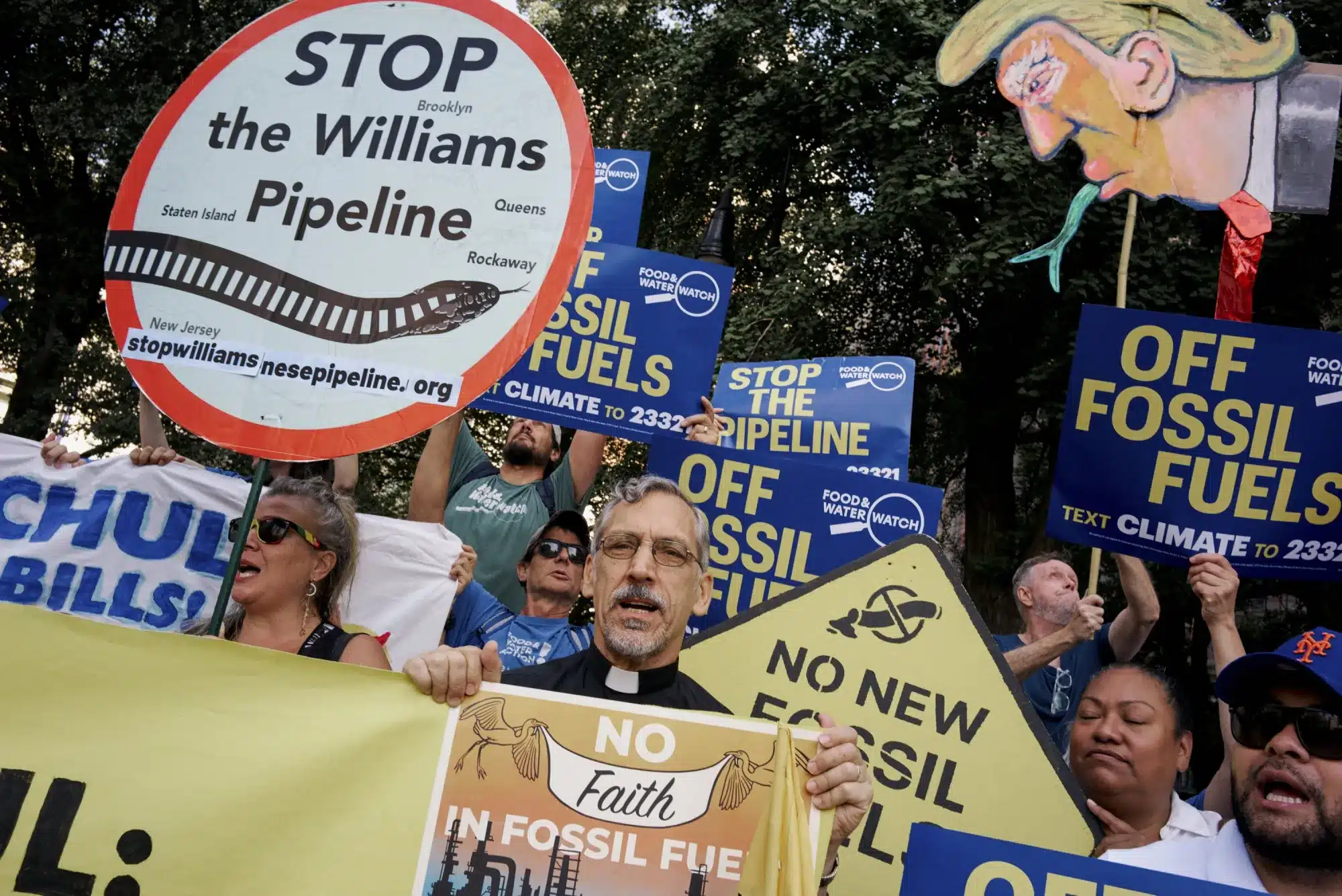
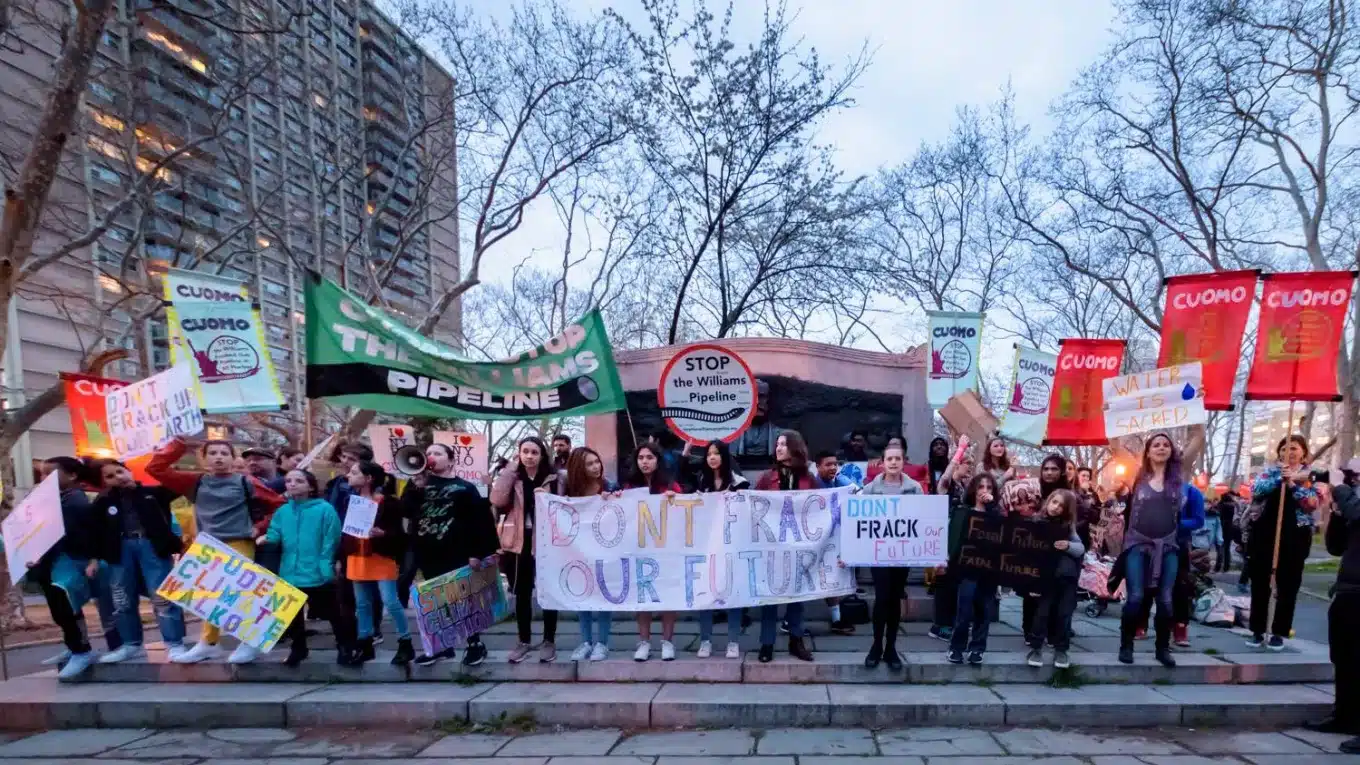
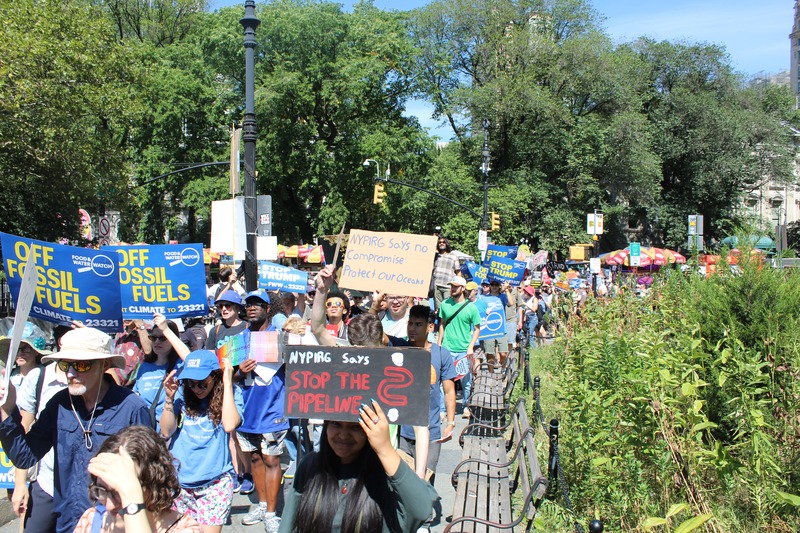
Some are calling for an alternate vision for New York that is based both on economics and science, and also on deeper values. On a local level, faith groups have joined with other activists to call for the NESE pipeline to be cancelled: Jewish Climate Action Network, Jewish Climate Action Network NYC, Congregation Beth Elohim Climate Team, and Dayenu: A Jewish Call to Climate Action signed on to this letter in July 2025.
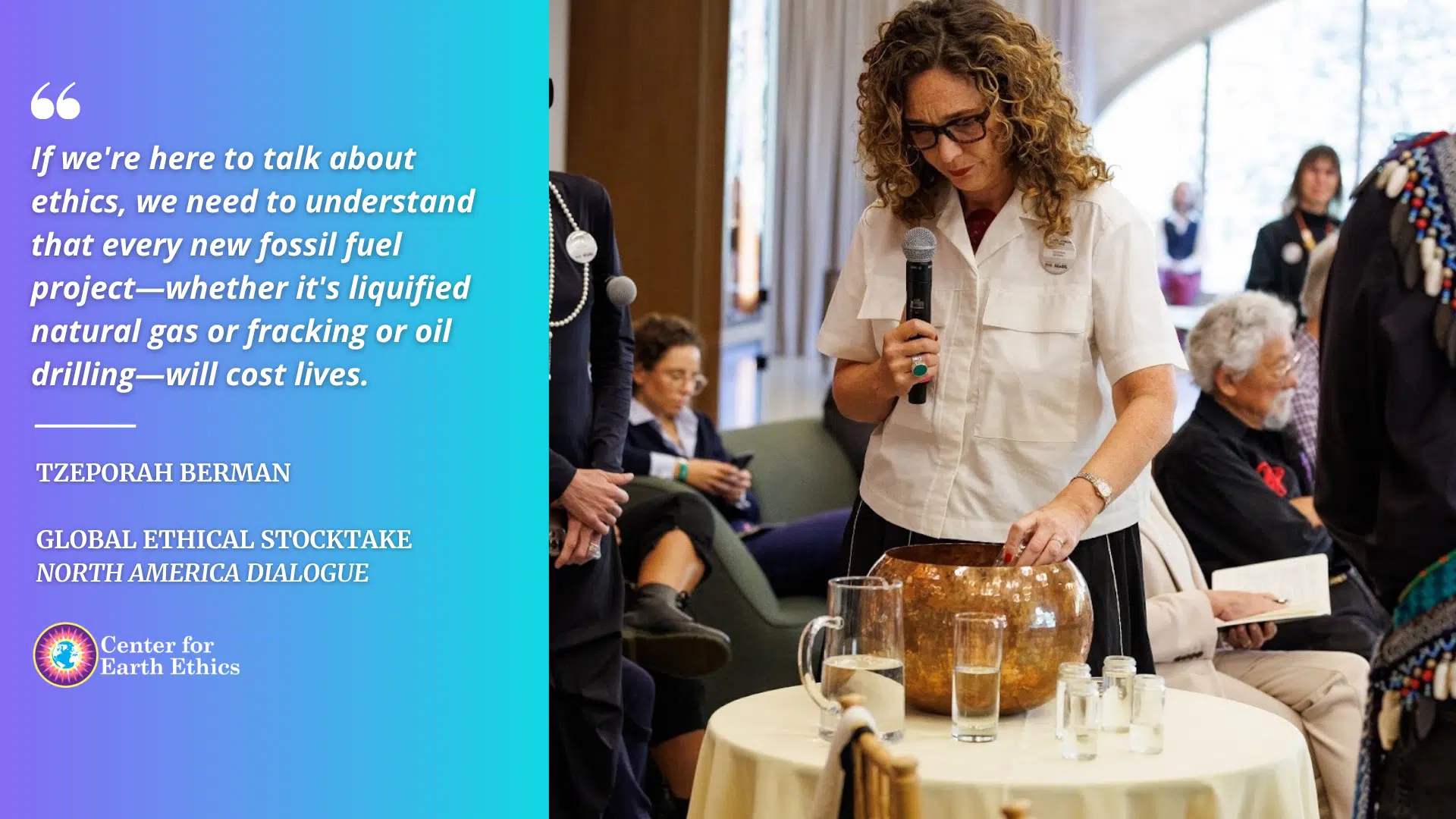
These efforts are consistent with a central theme that emerged in the Global Ethical Stocktake. Many participants in the GES gatherings and conversations sounded the alarm of continued fossil fuel extraction and combustion in the midst of the on-going climate crisis. One such voice was Tzeporah Berman, founder and steering committee chair of the Fossil Fuel Non-Proliferation Treaty Initiative, who participated in the official North America Dialogue in New York.
Environmental justice activist Sharon Lavigne spoke out about fossil fuels at the Katrina+20 self-organized GES dialogue in New Orleans on August 28, 2025. Ms. Levigne represents one community that is affected first and worst by the climate crisis and other layers of environmental harm: Louisiana’s Cancer Alley, an 85-mile stretch of more than 200 fossil fuel and petrochemical plants between Baton Rouge and New Orleans on the Mississippi River.
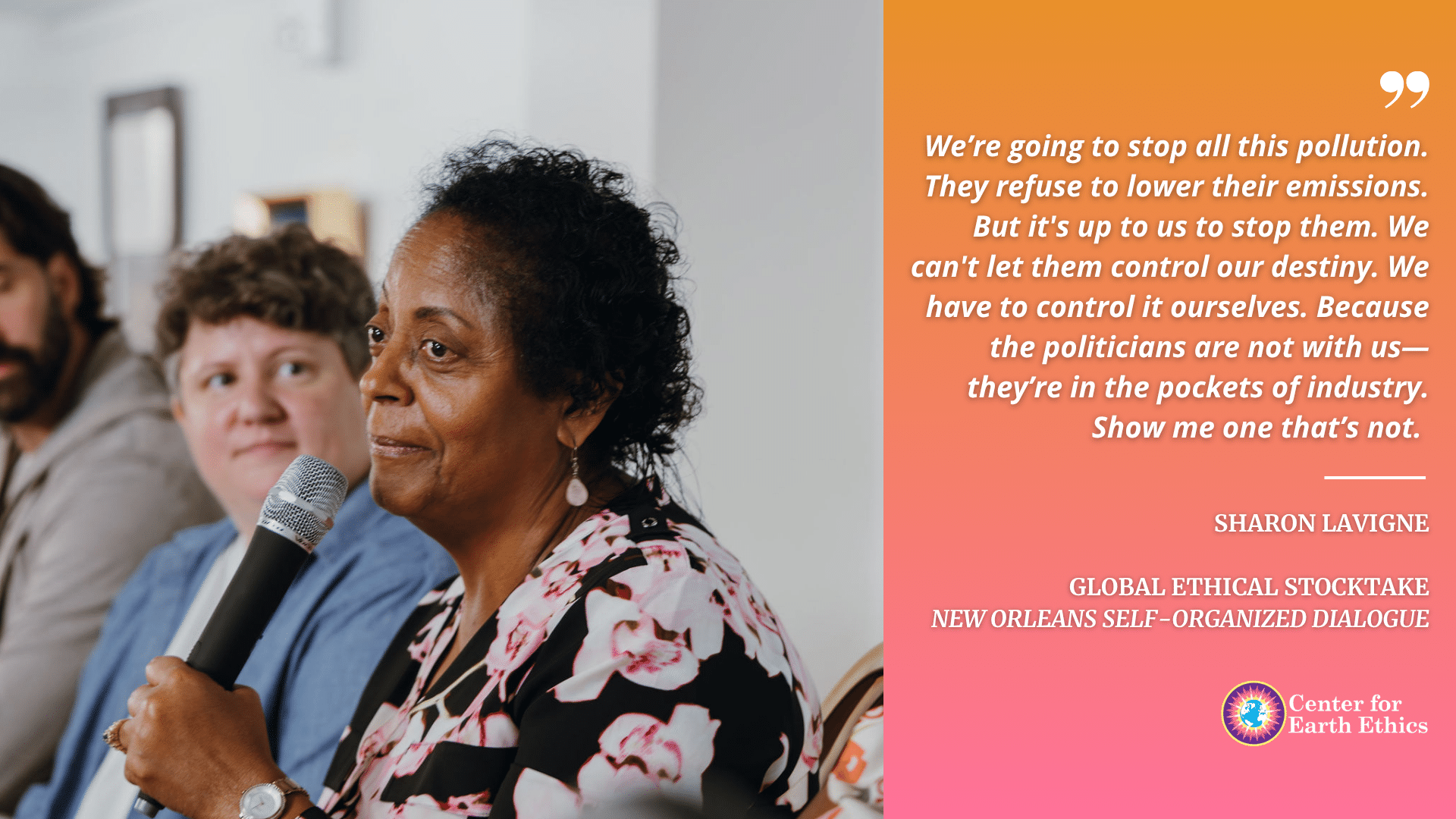
A consistent refrain in the GES dialogues was that the only way out of the climate crisis is to fully pivot our energy systems away from fossil fuels to renewable, clean sources of power. There is no future where we continue to burn fossil fuels without irreparably damaging our planet and all of life on Earth. The United States bears extra responsibility due to the fact that it is the largest historical emitter. Minister Silva states it plainly: we must have the courage to move toward a phase out of fossil fuels, because that is “the only way to face the problem from the root.”
In its letter to the New York State Public Service Commission during the official comment period on the NESE pipeline, the Center for Earth Ethics framed its objections to the pipeline on moral and ethical grounds:
The project fails to consider the needs of non-human species in sensitive marine ecosystems that would be impacted in New York Harbor by the construction of the pipeline.
Nor does the project consider the needs of future generations who will bear the greatest burden of climate change. It is imperative to cease burning fossil fuels and eliminate all forms of greenhouse gas emissions in order to provide a livable, stable planet for future generations. According to the Intergovernmental Panel on Climate Change (IPCC), “[p]rojected CO2 emissions from existing fossil fuel infrastructure without additional abatement would exceed the remaining carbon budget for 1.5°C.” [Emphasis added.] IPCC scientific investigations have established 1.5°C as the warming threshold beyond which “catastrophic planetary impacts” are likely to be unavoidable. Clearly, adding new fossil fuel infrastructure puts future generations at even greater risk.
NESE will undermine critical gains being made in New York and New Jersey to reverse the climate crisis by curtailing the extraction and burning of fossil fuels. Our most vulnerable communities are the ones most harmed by this outdated energy system. It is also true that it ultimately harms the whole society, every step of the way.
New York State is stumbling under pressures from the Trump administration and the fossil fuel lobby. The NESE decision reflects how quickly ethical commitments can erode when political and industry pressures intensify. Yet the ethical standards articulated by faith and justice movements worldwide—and echoed in GES Dialogues—are unambiguous: wealthy, historically high-emitting regions have a responsibility to accelerate the transition away from fossil fuels. Upholding those principles demands that New York reject new fossil-fuel infrastructure and act consistently with the long-term wellbeing of affected communities, non-human life and future generations.